
Bathroom Windows: Privacy, Ventilation and Replacement Choices
Choose glass, operation and installation details that suit the way your bathroom works.
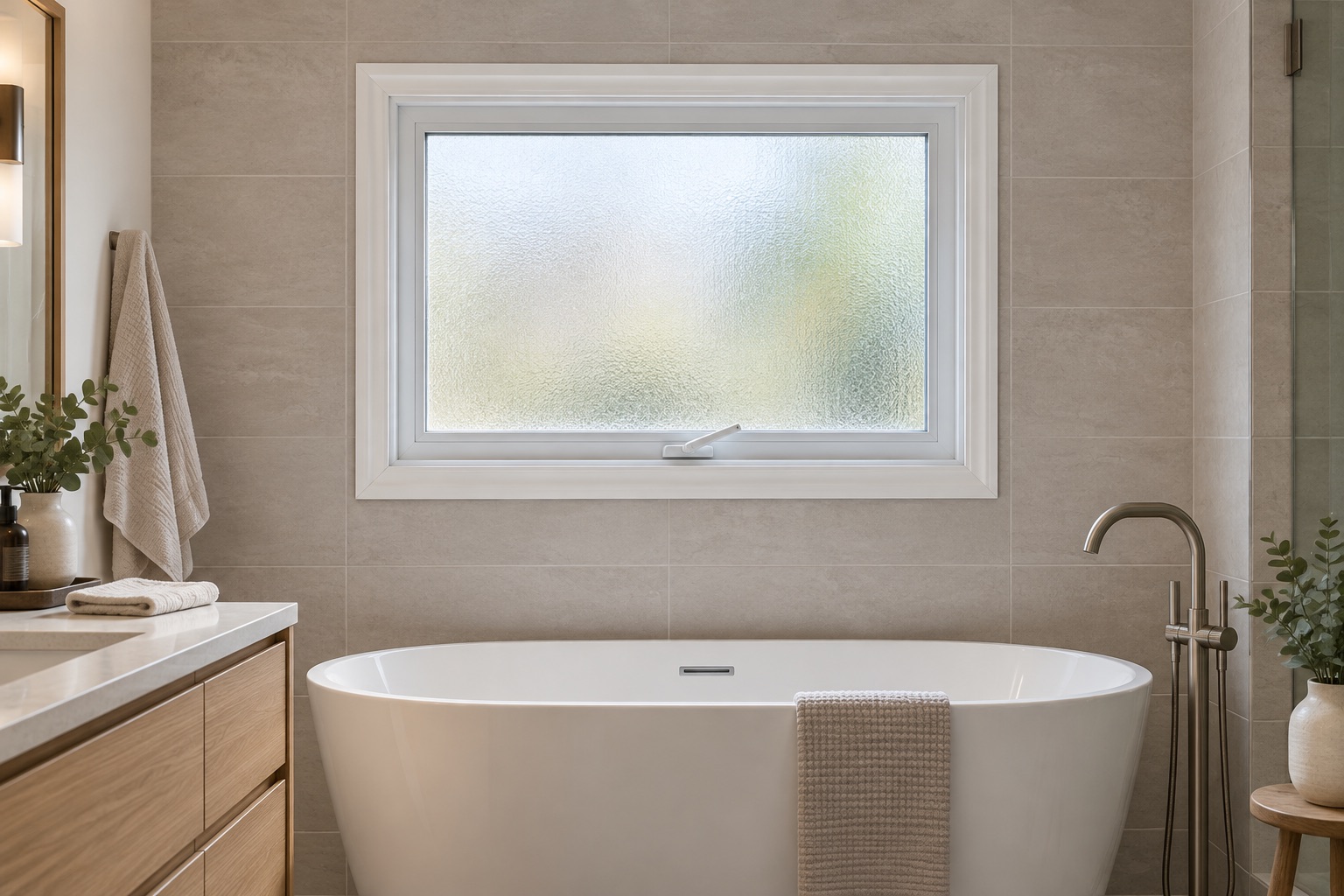
A good bathroom window balances privacy, daylight, practical operation and a finish suited to the surrounding space. Start with what someone can see from outside, how the room removes moisture and whether the opening is exposed to shower spray.
The right replacement is not automatically the smallest window or the most heavily frosted glass. Review the room from both sides before choosing a frame, opening style and glass specification.
Check privacy in daylight and after dark
A daytime view does not tell you everything about privacy. Interior lighting can make silhouettes and sightlines more noticeable at night. Consider neighbouring windows, paths, decks and reflections in bathroom mirrors.
- Ask to see the actual obscure or textured glass sample, rather than choosing by its name alone.
- Explain whether you need privacy across the whole pane or only at a particular sightline.
- Review what changes when the sash is open.
- If considering film, confirm compatibility with the glass and warranty before applying it.
A higher opening can help with some sightlines but may be harder to operate and clean. Obscure glazing can admit daylight while reducing a clear view, but its privacy effect depends on the specific pattern and lighting.
Choose the opening style around access and clearance
| Option | Potential fit | Detail to check |
|---|---|---|
| Awning | A top-hinged opening in a compact or higher position. | Can you reach the operator and locks? Where does the sash project outside? |
| Casement | An accessible crank-operated opening. | Swing clearance and the privacy sightline when fully open. |
| Slider or hung | A space where an outward sash would interfere with a path. | Reach, track care, sash operation and the accessible ventilation area. |
| Fixed glass | Daylight where an opening is impractical and the room's ventilation needs are met separately. | The complete ventilation design, cleaning access and location-specific requirements. |
See the product details for awning, casement and slider windows. An awning sash may offer some shelter, but an open window should not be treated as weatherproof in wind-driven rain.
An opening window is only part of moisture control
A bathroom's ventilation needs cannot be judged from the presence of an opening window alone. The room needs an appropriate ventilation solution, and a window alone is unreliable when outdoor weather makes opening it impractical.
NRCan recommends bathroom exhaust fans that vent directly outdoors. Review persistent moisture with the appropriate contractor rather than assuming a replacement window will resolve it.
Identify where the water appears. Moisture on the room-side glass, fog between sealed panes and water entering around the frame are different observations. Photograph the pattern and note whether it follows a shower, cold weather or rain. Read more about window condensation from NRCan.
A window beside a shower needs a coordinated installation
Tell the assessor if the frame, sill or surrounding trim receives direct water spray. The window installation, waterproofing and tile detailing need to work together. A moisture-tolerant frame material does not make the surrounding wall waterproof.
Ask which glazing is suitable for the exact location, including whether safety glazing is required. Confirm responsibility for waterproofing, sill detailing and tile repairs before work begins. Replacing only the window may leave an existing wall or shower-detailing problem unresolved.
Compare the complete window's performance
A bathroom does not deserve a lower-performance window simply because it is used differently from a bedroom. Compare the actual model's insulation and air-leakage specifications, its size and the proposed installation. Avoid relying on a generic claim that one opening style is always the most efficient.
For an understandable comparison, ask for the certified whole-window ratings. NRCan explains U-factor, solar heat gain and Energy Rating. The recommendation should account for privacy glass as well as thermal performance.
What to include in a bathroom replacement quote
- The operating style, exact glass pattern and any safety-glazing specification.
- The frame condition and the method of removal and installation.
- Interior waterproofing, trim or tile work, with responsibilities identified.
- Exterior finishing and any access constraints.
- Any moisture investigation or ventilation work that needs a separate scope.
Our window quote checklist helps compare the inclusions. For early budgeting, use the cost calculator; unusual access or surrounding repairs require an on-site assessment.
Bathroom window questions
Will frosted glass give complete privacy at night?
Do not assume every pattern performs the same way. Ask for a sample and consider lighting, distance and the view through an open sash. Additional privacy measures may still be useful.
Will a new window stop bathroom condensation?
It may help if poor window performance contributes, but moisture levels, ventilation and air circulation also matter. Have persistent condensation or water entry assessed before deciding on the repair.
Can a window remain inside a shower area?
That needs a site-specific review of glazing, waterproofing and the surrounding construction. Coordinate the window supplier and bathroom contractor before ordering.
Plan privacy and comfort together
Bring Optima photos of the bathroom, the exterior opening and any moisture concerns. Discuss suitable glass, operation and the installation details before choosing a replacement.
